DHI Hair Transplant: Why Choose It Over Other Methods?
DHI compared with FUE and FUT: how Direct Hair Implantation works, its key advantages, the month by month timeline, side effects and what results to expect in Dubai.
When you are considering a hair transplant, choosing the right technique is essential. One of the most advanced methods available today is Direct Hair Implantation (DHI). If you are weighing up options like FUE (Follicular Unit Extraction) or FUT (Follicular Unit Transplant), DHI offers some unique advantages that can make it the ideal choice.
What is DHI?
More than 85 percent of men have some thinning hair by the age of 50, and more than half of women will also experience noticeable hair loss in their lifetime. Several surgical techniques have been developed to restore lost hair, the most common being Follicular Unit Transplant (FUT) and Follicular Unit Extraction (FUE).
During FUT, the surgeon removes a strip of skin from the back of the scalp and extracts the individual follicles from it. During FUE, the surgeon removes follicles directly from the scalp. In both, the follicles are then implanted into the thinning areas.
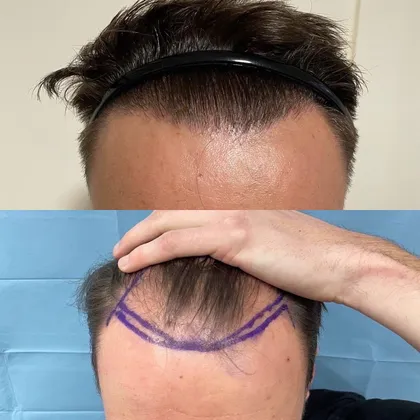
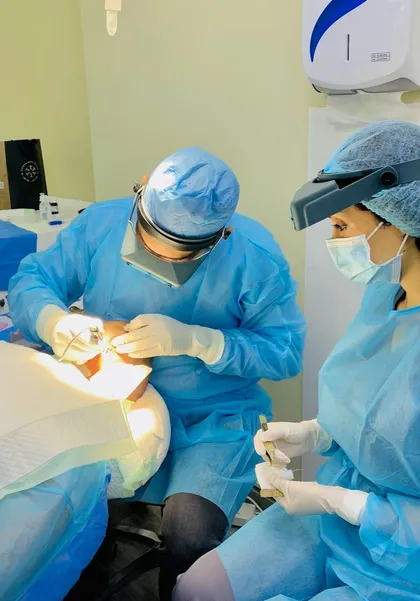
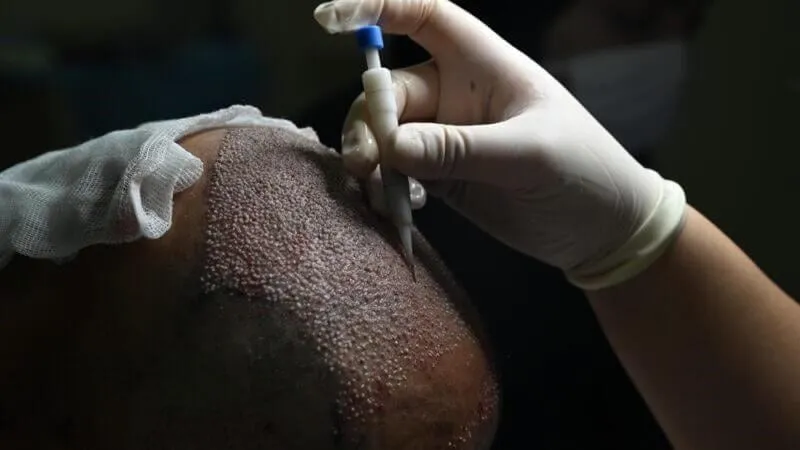
Direct Hair Implantation (DHI) is a refinement of the FUE technique. In standard FUE, the surgeon first cuts tiny channels in the scalp and then places the follicles. In DHI, a pen shaped instrument called the Choi implanter does both steps at once, extracting and implanting each follicle directly, with no pre made incisions.
Why choose DHI over other techniques?
1. Precision and control
The Choi pen gives the surgeon precise control over the depth, angle and direction of every implanted follicle. That control is what produces a natural looking result that follows your own growth pattern.
2. Faster recovery
Because DHI handles each follicle minimally and uses a very fine instrument, healing tends to be quicker than with FUT and its larger incisions. Many patients return to their normal routine sooner.
3. Higher graft survival rate
Follicles are implanted immediately after extraction, so they spend less time outside the body. That shorter interval improves the survival rate of the grafts, so more transplanted hairs thrive.
4. Minimally invasive
DHI involves no strip removal and no stitches, which means less discomfort afterwards, minimal scarring and a quicker return to normal activities.
5. Ideal for smaller, targeted areas
The precision of DHI makes it especially well suited to filling in thinning areas or specific patches without disturbing the surrounding hair.
DHI vs FUE: what is the difference?
| Feature | DHI | FUE |
|---|---|---|
| Tool used | Choi implanter pen | Manual or motorised extraction tool |
| Implantation | Direct, no pre made incisions | Incisions made before implantation |
| Control | High control over angle, depth, direction | Less control over direction and angle |
| Healing time | Faster, less trauma | Slightly longer recovery |
| Ideal for | Smaller areas, higher precision | Larger areas, full coverage |
| Scarring | Minimal | Minimal, can vary |
Both are advanced, effective techniques. The right one for you depends on the extent of your hair loss, your donor supply and your goals, which is exactly what a consultation is for.
DHI hair transplant in Dubai
Dubai has become a hub for medical tourism, especially for cosmetic procedures, thanks to its top tier specialists and advanced technology. When choosing a clinic, look for an experienced surgeon who specialises in the DHI technique. Dr Ahsen offers personalised consultations and performs the procedure himself, aiming for natural results, a high graft survival rate, minimal scarring and quick recovery.
Month by month results
- First month: you may notice some shedding of the transplanted hair. This is completely normal and part of the natural hair growth cycle.
- Months 3 to 4: new hair begins to grow. It may be fine and delicate at first, then thickens over time.
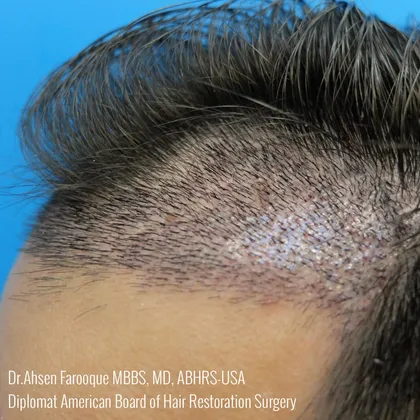
- Month 6: most patients see clearly noticeable growth that begins to blend with existing hair.
- Months 9 to 12: the full result develops, with the transplanted hair grown, thickened and matured.
Possible side effects
Like any procedure, DHI carries some risks, though they are usually minimal in skilled hands:
- Swelling around the forehead or eyes, which normally settles within a few days.
- Redness and itching in the donor and recipient areas.
- Temporary shedding (shock loss) in the first few weeks, which is temporary.
- Folliculitis, an inflammation of the follicles that can be treated topically.
Following your surgeon’s aftercare instructions carefully is the key to a smooth recovery.
Conclusion
DHI is an excellent choice for anyone wanting a minimally invasive, precise hair restoration procedure with a faster recovery. Whether you are comparing DHI with FUE or exploring hair transplant options in Dubai, DHI stands out for its precision, natural results and innovative approach. To find out whether it is right for you, book a free consultation with Dr Ahsen.
Written by
Dr Ahsen Farooque
MBBS, MD, ABHRS (USA). Diplomate of the ABHRS (USA), DHI Master Specialist and DHA-licensed hair transplant surgeon in Jumeirah, Dubai.