Is FUE Hair Transplant Safe? What You Need to Know
A clear look at the safety of FUE hair transplants: why the technique is low risk, the possible side effects, and how to ensure a safe procedure and recovery.
Follicular Unit Extraction (FUE) is one of the most popular and advanced techniques in hair restoration. If you are considering it, safety is naturally a top concern. This guide covers the safety of FUE, the potential risks, and the steps that keep patients safe.
Understanding FUE
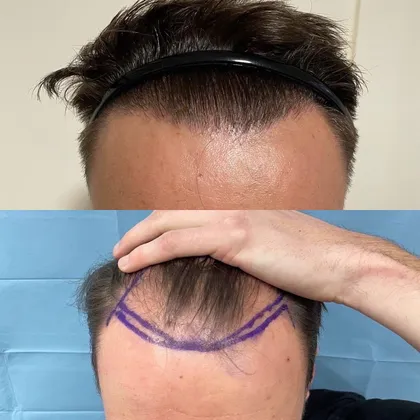
FUE extracts individual follicles from a donor area, usually the back or sides of the scalp, and transplants them to thinning areas. Unlike the older strip method, FUE is minimally invasive and leaves no linear scar.
Why FUE is considered safe
- Minimally invasive: tiny punches extract the follicles, significantly reducing trauma compared with older methods. This means faster healing and fewer complications.
- Advanced technology: modern FUE uses precision tools that improve accuracy and reduce the chance of error.
- Skilled surgeons: safety depends heavily on the surgeon. Board certified, experienced surgeons follow strict protocols that keep risk low.
Potential risks and side effects
Like any procedure, FUE carries some risks, though they are generally minor:
- Infection: rare, and minimised by a sterile environment and proper aftercare.
- Bleeding: minor bleeding is expected; thorough pre operative assessment identifies anyone at higher risk.
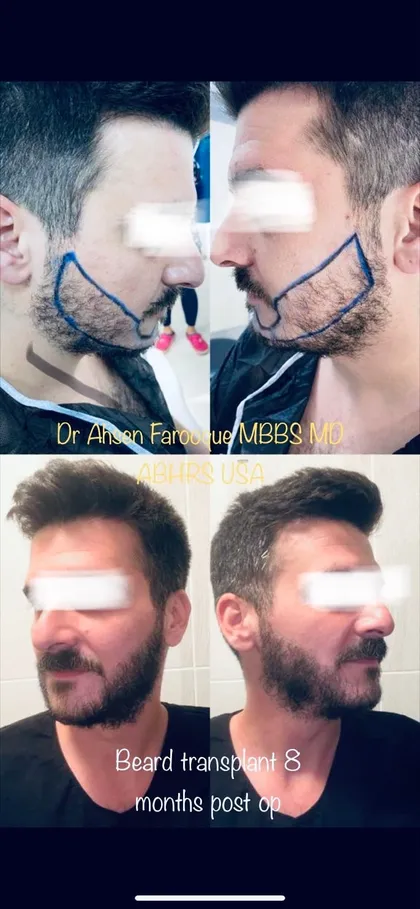
- Scarring: only tiny, dot like scars that are usually hidden by surrounding hair.
- Pain and discomfort: some is expected early on and is easily managed.
- Swelling: around the forehead and eyes, typically settling within a few days.
- Numbness: temporary, resolving over a few weeks as nerves heal.
- Shock loss: temporary shedding of transplanted and existing hair, which regrows within a few months.
Ensuring a safe procedure
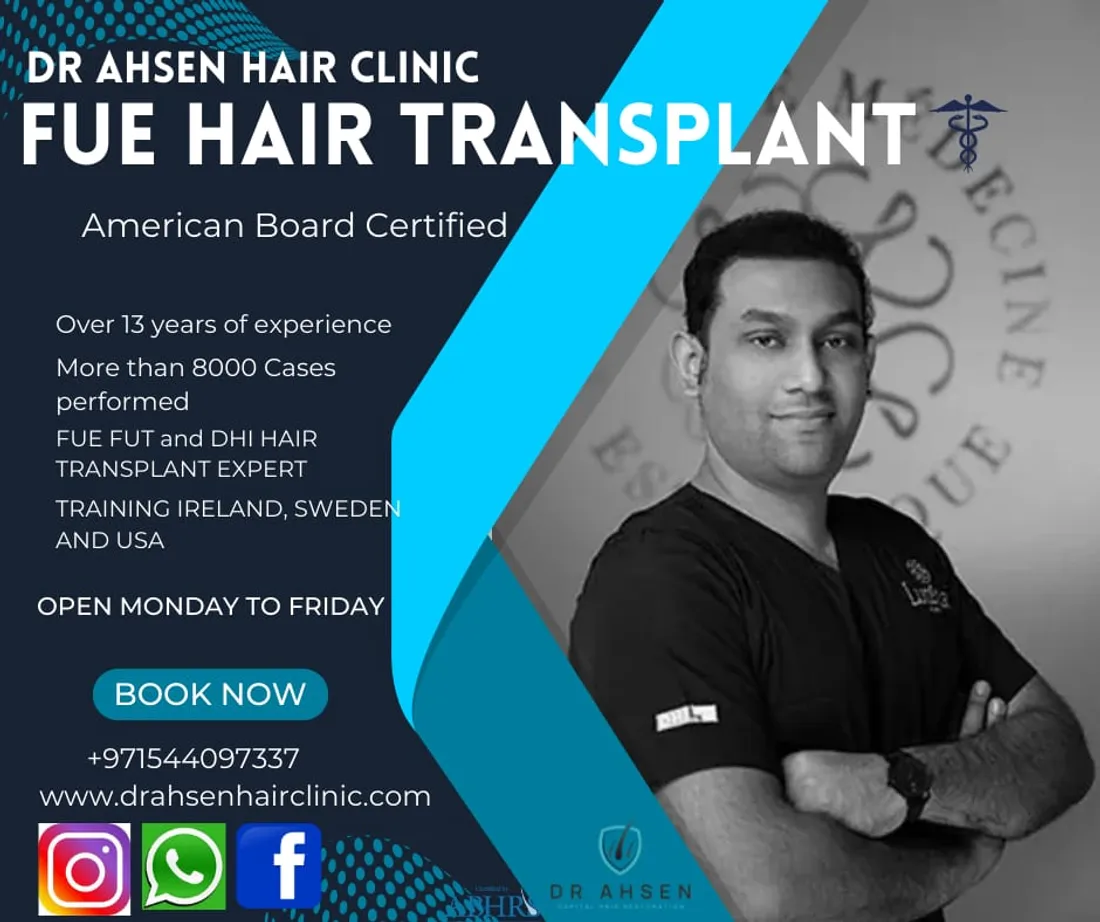
- Choose the right clinic. Look for board certified surgeons, strong reviews and a proven track record. Dr Ahsen Farooque is a Diplomate of the American Board of Hair Restoration Surgery (ABHRS, USA) and an expert in FUE. Book a free consultation to find out whether FUE is right for you.
- Have a proper pre operative assessment. Your medical history and current health are reviewed to identify any risks.
- Follow pre operative instructions. These may include pausing certain medications and avoiding smoking.
- Follow post operative care. Keep the scalp clean, avoid direct sunlight, do not touch the grafts, and take any prescribed medication.
- Attend follow ups. Regular check ups let your surgeon monitor healing and catch any issue early.
Long term safety and results
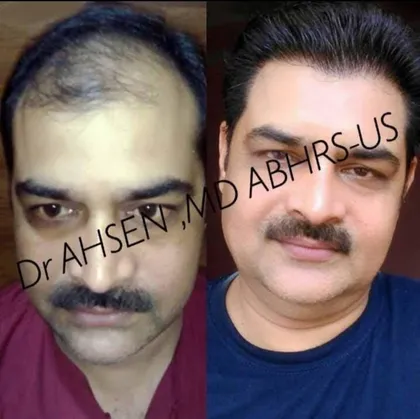
FUE offers lasting results, with transplanted hair behaving like natural hair. Maintaining a healthy lifestyle, a gentle hair care routine and good stress management all support long term hair health.
Conclusion
When performed by a qualified surgeon in a reputable clinic, FUE is a safe and effective solution for hair restoration. Understanding the procedure, the risks and the precautions helps ensure a positive experience and a successful, natural result.

Written by
Dr Ahsen Farooque
MBBS, MD, ABHRS (USA). Diplomate of the ABHRS (USA), DHI Master Specialist and DHA-licensed hair transplant surgeon in Jumeirah, Dubai.